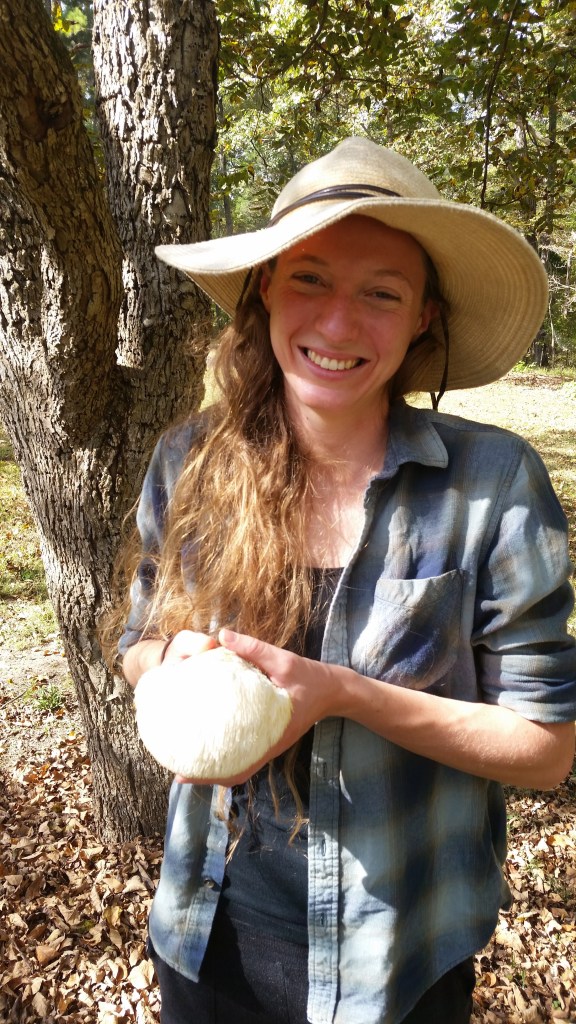
Image of the author, a young white woman with messy long brown/blond hair with a lopsided straw hat, proudly displaying the first Lion’s Mane Mushroom she ever foraged. 2020.

Hi! My name is Sara and I am a differently-abled farmer.
I was diagnosed with moderate-severe rheumatoid arthritis (RA) when I was 20 which ultimately ended my short lived military career. As I struggled with the physical and emotional pain that came with my diagnosis and discharge, I found gardening and learning how to cook with the fresh food I grew helped me escape.
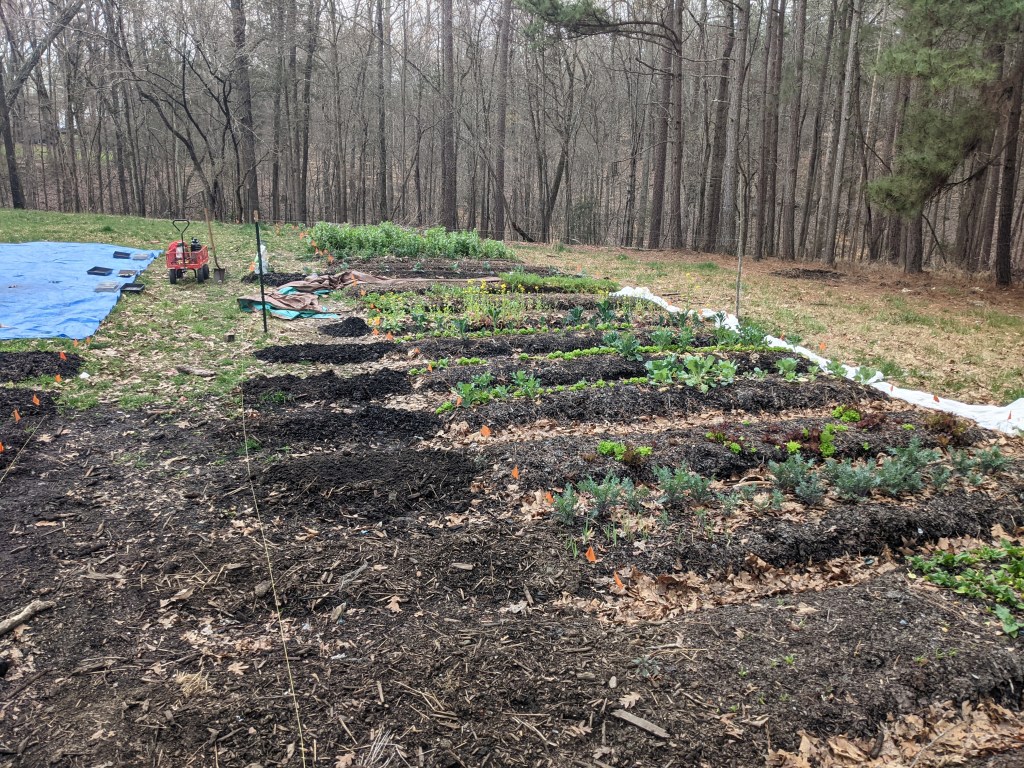
What started out as a few pots of herbs and a cucumber plant on my back porch blossomed into a roughly 3,000 sqft market garden called Freckle Twins’ Garden (named after my two emotional support dogs) where I grow vegetables, herbs, and flowers.
Eating seasonally with fresh, wholesome foods has grown into a cornerstone of my life. Before my RA diagnosis, I used to grocery shop based solely on the price tag (hello Grate Value and Dollar Tree). As I started learning more about RA and the powerful role food plays in our health, I started shopping more conscientiously, beginning with looking at ingredient labels and trying to pick more foods with ingredients I could pronounce.
I was already a big vegetable eater since my mom was vegan while I was growing up. I just didn’t know there was a difference between a conventional carrot, an organic carrot, and a fresh out-the-ground carrot. It was, well, just a carrot as far as I could tell. I started seeking out locally grown produce, visiting a local market where they trucked in exotic fruits and vegetables I had never seen at Walmart, mixed in with a few locally grown items (baby steps).
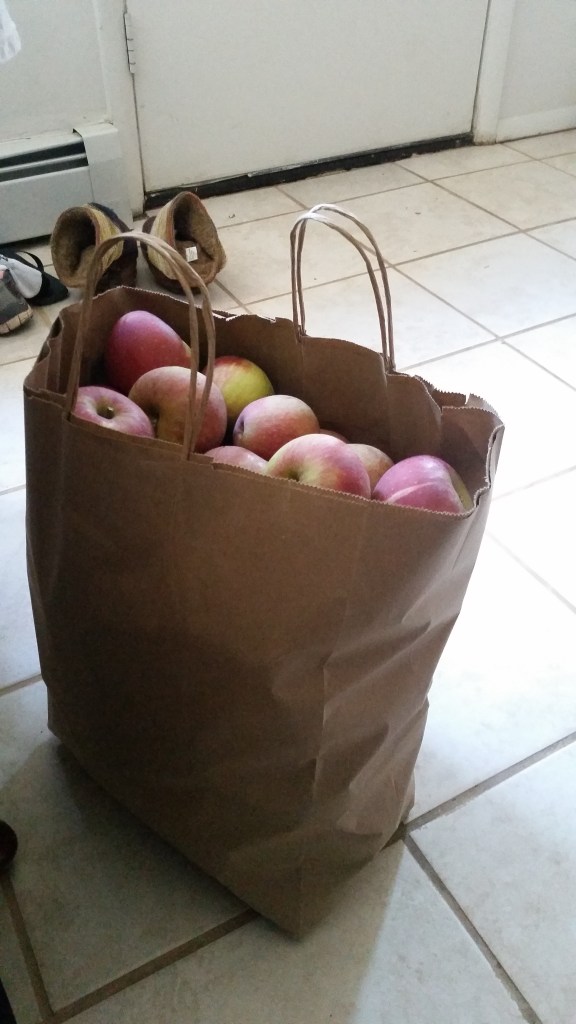
Around this time I became interested in canning so on study breaks on one or two weekends during apple season, I drove an hour South to a pick-your-own apple orchard and returned to my tiny studio apartment with more apples than any one person could possibly consume. Here began my first foray into truly fresh produce. I loved how distinctly different the flavors were in each of the different apple varieties, rather than the generic apple flavor I was used to from the store. I grew slightly obsessed with canning; starting with a pile of on-sale produce, processing it, then ending up with glistening rows of shelf-stable deliciousness I could share or hoard all for myself. This was a rather therapeutic experience for me. My little kitchen was a small piece of my life I could control within the swirling turmoil that was everything else including my chronic pain.
After graduating, I got a job managing a non-profit animal assisted therapy farm where I worked for about six months before my body gave out. This was my first time really seeing how different my life was going to be from what I had imagined. I figured I just couldn’t handle agriculture, so I searched for a psychology research position utilizing my degree (crazy talk, I know), and came up dry. During all of this, I was starting to container garden and still canning at home, mostly jam, and occasionally selling a jar or two to cover the equipment and produce expenses.
My husband, the best person to ever happen to my life, suggested one day as I pulled yet another batch of jam out of the canner that maybe I should start a jam business. I was struck by the idea, then immediately latched on. How hard could it be? I was already canning enough to start out small and see where it could go.
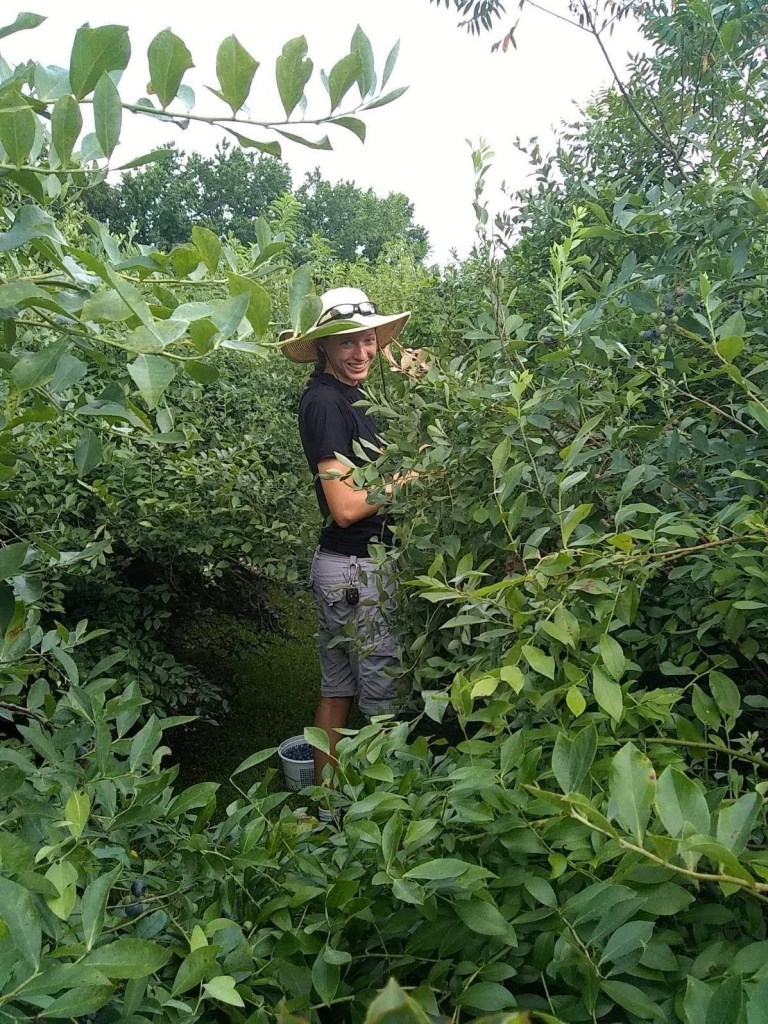
I made so many types of jams I got bored. There was no challenge to going to the grocery store and just buying whatever I wanted then going home and following the recipe. I learned about a new farmer’s market that was looking for vendors and one of their stipulations was that everything you sold needed to be locally produced and locally grown. Here was my challenge! What could I create using only local produce? It was the end of April, going into May and I learned strawberry season was coming to a close. I raced to a local you-pick farm and spent hours shuffling through the field picking gallon after gallon of ruby red gems. I brought home so many berries and didn’t know how to properly store them that many rotted before I could process them. I didn’t care though. I was so excited to finally find my niche.
Over time, I learned more about farming practices as I researched local farms. I learned about all the chemicals that were being used to produce most of the fruit I was eating and processing and I started asking questions that made a lot of the farmers I worked with upset or defensive. Do you use chemicals? What chemicals do you use? Why do you use them? I began to wonder about whether or not there was an alternative way of growing, one that did not pump us, or the environment, with toxins.
I started learning about organic and sustainable agriculture, and began scouring my area for these sorts of producers. They were hard to find but boy oh boy were they worth it. I fell in love with the way they talked about the land they stewarded. I could listen for hours as they showed me their diverse plantings and the important relationships they created. I loved hearing all of the insects thriving on these properties compared to the barren wastelands of the chemically farmed operations I previously visited. I fell in love a little more with every bite of perfectly ripe fruit that held a nuanced depth of flavor I had never experienced before. I loved even more how proudly and enthusiastically these farmers talked about their growing practices. No more blustering or defensive posturing, no more, “we let our kids eat the berries right off the plants so these chemicals are safe,” kinds of justifications.
People could not get enough of the local and sustainably grown jams I produced and as a result my business was growing faster than I could keep up. In the middle of the second year the pressure took its toll and I suffered a severe flare that left me just about bed ridden for a month with a full month of slow recovery afterwards. I was exhausted, burned out, and clearly needed a break. I was offered a part-time position at one of my partnering farms and gratefully accepted. It was time for me to start learning more about this beautiful agricultural community I had grown to love so much.
I have worked on a number of farms since, from CSA farms and even a lavender farm, but ultimately decided to work just for myself. I grew tired of dealing with what I know just about everyone with different-abilities has experienced in the work-place; lack of compassion/understanding and accommodations.
Compassion and accommodations are so important for me, especially as my list of conditions and their specific needs has only grown longer since my first diagnosis all those years ago. I absolutely can farm, I just need to do it at my own pace. This is part of why I started this blog. I want to show you that no matter what other people think about your abilities, you are a badass and you can garden or farm or do whatever you want.
This is why I will never say or use the word “disabled” or any of its permutations. I choose to use “differently-abled” because I want to celebrate what we can do rather than what we may not be able to. These differences can be used as assets rather than burdens. For example, I have to move slow and steady otherwise my body gets stressed and flairs. You know what that means? It means I have grown fairly good at evaluating systems and protocols for streamlining unnecessary steps and movements. Sounds much more efficient to me than just going as fast as possible, don’t you think?
What differences have you turned into assets? How did you become interested in agriculture?
 Creaks and Greens